Day Dream
One of the most beautiful and harmonically complex compositions among the Great American Songbook.

Thanks for reading my Substack! If you enjoy these artists and their work, tune in to my radio show “Golden Age Radio” for more of the same. On Thursday mornings, 9-11 AM EST. You can stream live or listen for up to two weeks after airtime at Wfhb.org. Community radio for south-central Indiana.
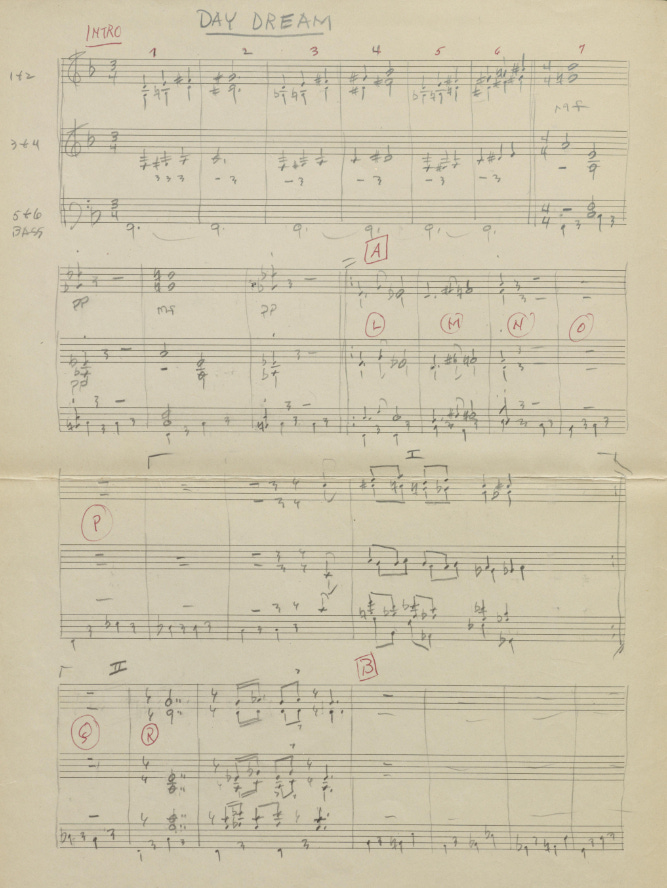
Billy Strayhorn’s handwritten arrangement of “Day Dream” now resides in The Library of Congress.
The streaming music generation will never know the pleasure of heading to the local record store on a free afternoon to browse LPs. There was no algorithm genie to declare “if you like that, then you’ll love this”. You were on your own, with a bit of help from the record store clerk who might know your musical interests. I loved the smell of the record store, not unlike a library, really. The paper, the cardboard, the vinyl…and maybe a little patchouli emanating from the clerk. Digging through your favorite genres and then ferreting out a new LP or two to carry home was your reward for seeking and discovering new music. Recommendations from friends helped also, along with a good FM radio station.
Vinyl was always spinning as you entered the store, the hi-fi system speakers filling your ears with the latest promotional LP. I remember well the day I walked into my local college town music store ready to spend a delightful 2 hours combing through albums and full of hope that I would snag a few to come home with me. Suddenly, I stopped in my tracks. I had never heard anything so beautiful, so lilting, so mesmerizing! I told the clerk, “I have to have that record.” He claimed it was his only copy and had been played many times. It wasn’t virgin-vinyl-brand-new. I didn’t care. I was determined it was going home with me.
The song that put me into an audio ethereal brain-spin was “Day Dream” composed by Billy Strayhorn specifically for saxophonist Johnny Hodges. The album was by a New York City band called The Widespread Depression Orchestra who were dedicated to reviving early jazz and swing from the 30s & 40s.
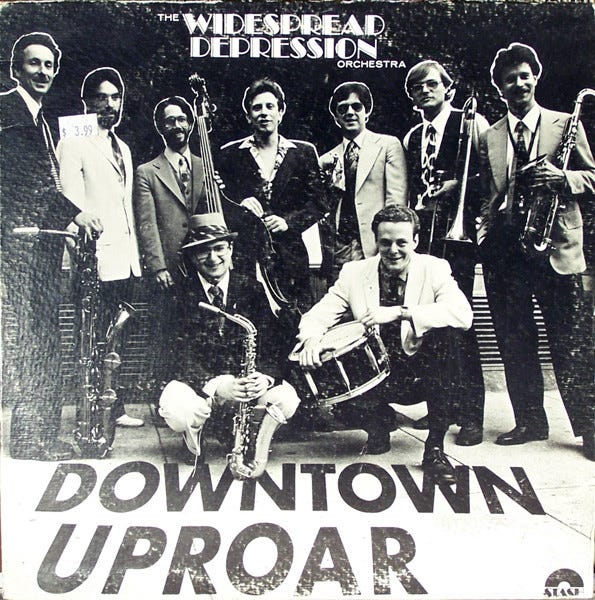
My album purchase that fateful day in the record store.
These were guys trying to sound like their heroes Duke Ellington, Count Basie, Jimmy Lunceford and Lionel Hampton. They were excellent musicians and I still enjoy the album. But it quickly lead me to the original recordings and composers.
I couldn’t believe that the tune “Day Dream” could be more beautiful than my first hearing that day in the record store. But when I heard saxophonist Johnny Hodges play his 1941 recording, I swooned. It had been composed specifically for him by Billy Strayhorn, Duke Ellington’s collaborator, arranger and composer. Hodges was known for his very emotive solo interpretations, being Duke Ellington’s premier saxophone soloist for 40 years.
The Ellington Orchestra was touring Europe in 1939. Billy Strayhorn had 7 weeks of solitude during that time to work on new compositions and arrangements. “Day Dream” was one of the many compositions created over that period. Strayhorn was an admirer of French Impressionism (think Ravel and Debussy) and the complex chord structure and lilting melody of “Day Dream” attest to that influence. The melody seems to hover above the harmony, rarely landing on the root of the chord. It has been described as a "floating reverie".
Hodges was the first to record it in 1941 and it became an instant jazz classic. He featured it on several other albums, as well. I’m partial to his 1961 recording “Johnny Hodges with Billy Strayhorn & Orchestra.” John Latouche wrote lyrics for the tune and a slew of singers have recorded it. Tony Bennett’s vocal recording of “Day Dream” is particularly noteworthy. Listen here to the poetic lyrics of John Latouche.
“Many composers in jazz are good at thinking vertically and horizontally, but Billy could write diagonals and curves and circles,” declared Donald Shirley, jazz pianist. “Day Dream” is a real testament to Strayhorn’s composing genius and Johnny Hodges’ excellent performance is a warm, touching and passionate interpretation of this jazz classic.
Lucky me that I found it those many years ago. If you know it already, lucky you also. If you did not know it before this essay, I’m happy you finally found it.
Further reading:
https://www.jazzstandards.com/compositions-2/daydream.htm
https://www.jazzstandards.com/biographies/biography_127.htm
It’s a beautiful tune, and I don’t think Johnny Hodges gets enough credit today for his amazing body of work. Ellington was one of gateways into jazz!
Wow, what a beautiful piece, one I wasn't that familiar with. And perfect lyrics in the hands of Tony Bennett...priceless.